Project location
State the receiving facility country, city and delivery constraints. The contractual entity address is confirmed in issued correspondence rather than assumed from an unverified public listing.
State the receiving facility country, city and delivery constraints. The contractual entity address is confirmed in issued correspondence rather than assumed from an unverified public listing.
Submit the secure form to request the right commercial or technical route. Direct phone and email details are provided after region and inquiry type are identified.
Include time zone, shift pattern, preferred contact window and any survey or commissioning period. Response commitments depend on the confirmed scope.
A useful drawing shows induction and divert positions, accumulation length, elevation changes, merges, pedestrian crossings, mezzanine clearances and the service access bay. Add the governing carton envelope so gap control conversations stay grounded.
Describe the representative load in kilograms and millimeters, including orientation and overhang. If loads differ by shift, show the range rather than a single optimistic average. Note normal and peak movement frequency and how long the peak window lasts, including replenishment and exception recovery assumptions that change buffering needs.
When AMR paths share the same network, mark scanner fields, charging bays and the conveyor release rules that protect pedestrian crossings. Social handles and regional routing details are confirmed after the first qualified inquiry rather than published as unverified contact theatre.
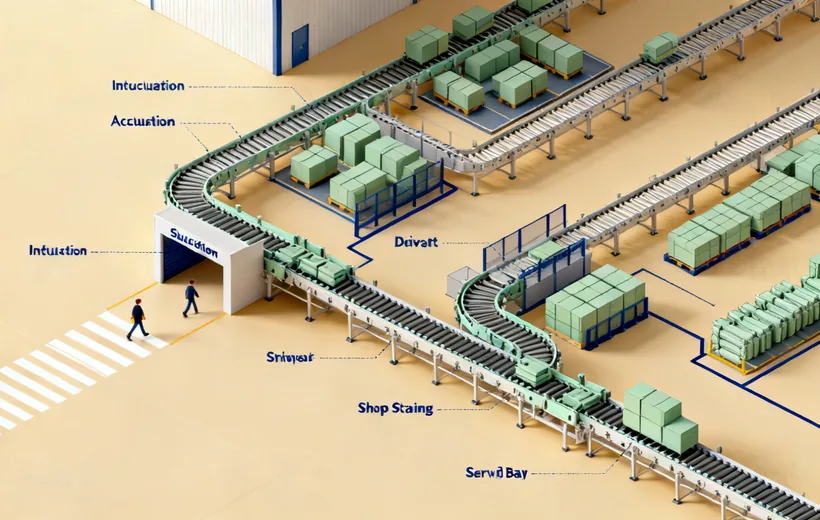
Include load unit, SKU or order profile, peak rate, accumulation strategy, interfaces and site constraints. Submitted figures are project inputs until checked against survey and configuration. A form submission is an inquiry, not an order or certified performance claim.